The best multi-channel attribution software depends on your business model, channels, and reporting requirements. Here are the top platforms for 2026:
- Best for B2B revenue attribution: AttributeIQ
- Best for enterprise account-level attribution: Dreamdata
- Best for e-commerce ROAS tracking: Triple Whale
- Best for SaaS and PLG attribution: HockeyStack
- Best for digital + offline attribution: Rockerbox
- Best for Salesforce enterprise attribution: Adobe Marketo Measure
Best Multi-Channel Attribution Software Comparison Table for 2026
Marketing budgets are under more scrutiny than ever, and “clicks and conversions by channel” doesn’t cut it anymore. What you actually need to know is which campaigns are moving pipeline, which channels are speeding up revenue, and which ones have stopped pulling their weight.
That’s what multi-channel attribution platforms are built for: pulling campaign data, customer touchpoints, and CRM revenue into one place so you can see what’s really driving growth. Below, we compare the leading platforms for 2026 on capabilities, ideal users, setup time, and pricing.
1. AttributeIQ
Best for: B2B SaaS and demand generation teams on HubSpot and GA4 who need revenue attribution across every marketing channel.
AttributeIQ is a multi-touch attribution platform that helps B2B teams connect marketing activity with pipeline outcomes and make more informed budget decisions. The platform combines first-party website tracking with HubSpot CRM data to provide a complete view of buyer journeys, channel influence, and revenue contribution.
Property
Attribution
Account
jent@nexa.com

Channel Influence
Measure channel impact across pipeline creation and closed-won revenue.
Total Pipeline
£440k
Avg Pipeline Value
£25.9k
Most Active Channel
Direct
Fastest Converting
Referral / urlopener.net
All Pipeline by Channel
£440k total pipeline
Velocity by Channel
Channel Breakdown
Where AttributeIQ Stands Out
Enterprise attribution platforms often require complex data pipelines, warehouse setup, and ongoing support from data teams before marketing teams can access reliable insights. With AttributeIQ, setup takes minutes, with most teams seeing their first attribution data within 24 to 48 hours.
Key Capabilities
- Channel influence measurement. Evaluate how different marketing channels work together across the customer journey and their impact on pipeline and revenue outcomes.
- Deal velocity analysis. Compare how quickly deals progress across different channels, from initial engagement to demo requests, trials, and closed-won revenue.
- AI-powered attribution exploration. Use Claude MCP to query attribution data, explore buyer journeys, and uncover marketing insights without manually navigating reports.
- Account-level journey intelligence. Understand the complete sequence of B2B interactions leading to conversion, from initial content engagement through sales-ready actions.
- Executive performance reporting. Deliver leadership-ready summaries of marketing influence, channel performance, and revenue contribution.
Pricing
Pricing starts at £89/month (Starter plan) for full multi-channel site tracking. The Pro plan at £149/month unlocks CRM-connected revenue reporting, executive Board Summaries, and buyer intent alerts based on prospect activity. Both include a 14-day free trial with no credit card required. See full pricing.
Ever wonder which channels are actually driving revenue?
Hook AttributeIQ up in under 15 minutes and you’ll start seeing real pipeline and revenue data within a day or two. Plans start at £149 a month.
Try it free for 14 days →2. Dreamdata
Best for: Enterprise B2B teams that need deep, account-level channel attribution across complex buying journeys and large data ecosystems.
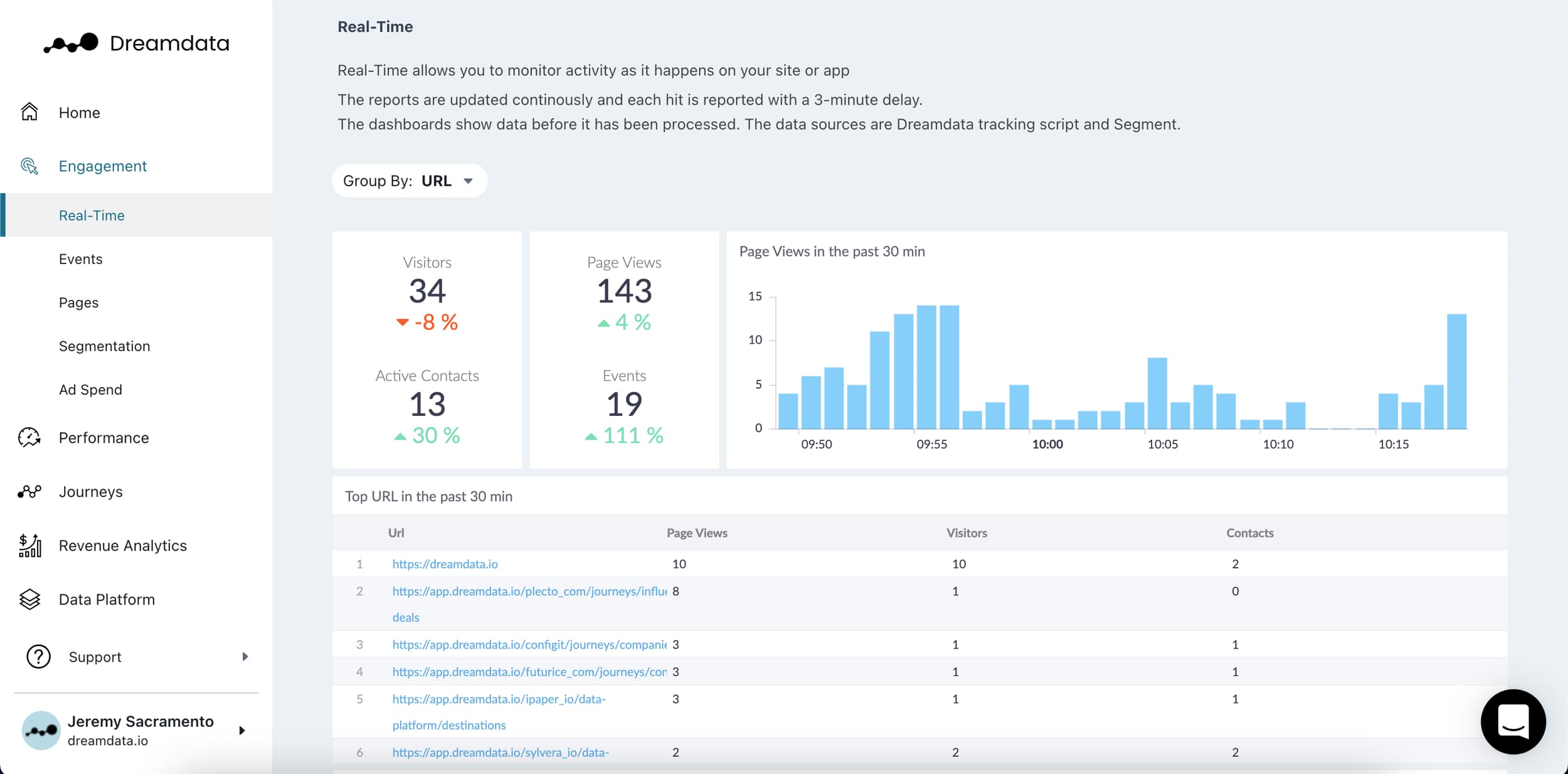
Dreamdata is an enterprise B2B attribution platform that helps companies understand how multiple marketing channels contribute to pipeline and revenue. The platform combines advertising costs, website activity, CRM data, and customer interactions to create a unified view of account journeys, channel performance, and revenue impact across the entire funnel.
Where Dreamdata Stands Out
Dreamdata stands out for its account-level approach to B2B attribution. It helps enterprise teams connect activity from paid media, organic search, content, and other marketing channels to the accounts, opportunities, and revenue influenced throughout a multi-stakeholder buying journey.
Key Capabilities
- Account-level channel attribution. Track how multiple stakeholders across the same company interact with marketing channels and connect those touchpoints to closed-won revenue.
- B2B CAC and ROAS reporting. Connect advertising spend with CRM revenue data to measure acquisition efficiency and understand the true return of each marketing channel.
- Custom attribution modeling. Move beyond first-touch and last-touch reporting with flexible models designed around complex B2B sales cycles and channel influence.
- Data warehouse and CRM integrations. Connect marketing, sales, advertising, and customer data sources into a centralised revenue attribution system.
- Executive performance reporting. Provide leadership teams with visibility into marketing contribution, channel efficiency, pipeline impact, and revenue growth drivers.
Pricing
Dreamdata does not publish fixed pricing. Plans are custom-quoted and typically range from $12,000 to $40,000+ per year, depending on tracked accounts, data volume, integrations, and reporting requirements. The platform is primarily designed for enterprise B2B teams with dedicated RevOps or data resources.
Recommended Reading: Dreamdata Pricing Review 2026: Costs, Features, ROI
3. Triple Whale
Best for: E-commerce and D2C brands that need accurate channel attribution and ROAS reporting across paid social, search, and Shopify revenue.
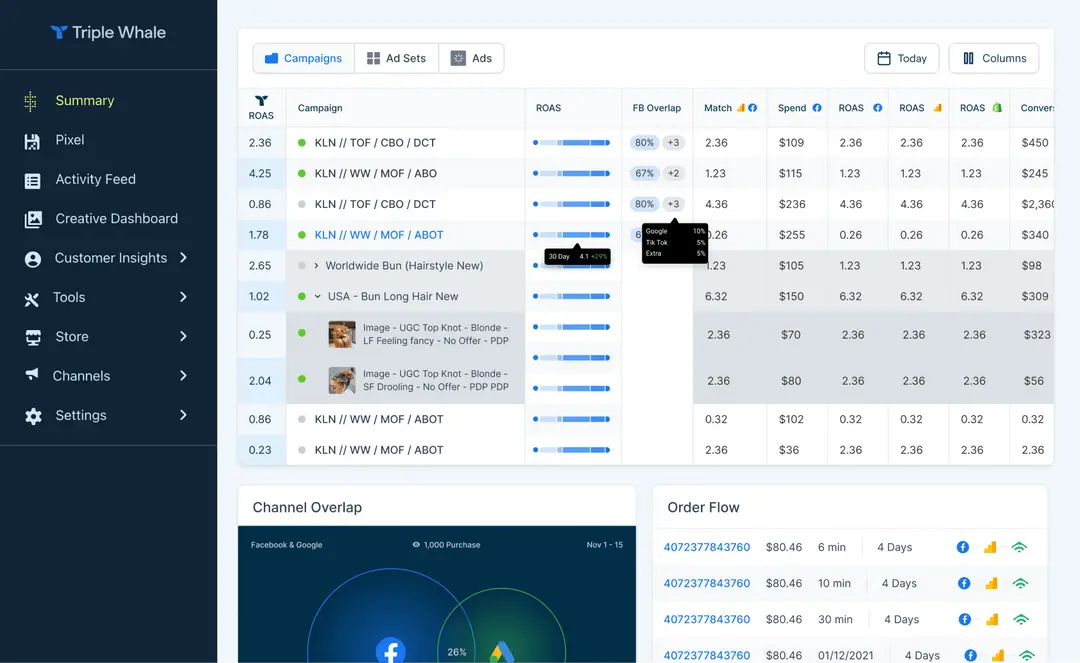
Triple Whale is an e-commerce attribution platform that helps brands connect advertising performance with customer purchases and profitability. The platform combines first-party tracking, Shopify data, and advertising platform insights to provide a complete view of channel performance, campaign efficiency, and revenue contribution.
Where Triple Whale Stands Out
E-commerce teams often struggle to understand which paid channels and campaigns are actually driving profitable revenue as browser restrictions, attribution gaps, and fragmented ad platforms make performance reporting less reliable. Triple Whale combines first-party tracking with store and advertising data to create a unified view of customer acquisition, channel impact, and ROAS.
Key Capabilities
- First-party channel tracking. Connect customer purchases back to paid media interactions across Meta, TikTok, Google, and other advertising channels using server-side tracking.
- Blended ROAS reporting. Measure advertising efficiency across channels by combining spend data, revenue performance, and profitability metrics in a single dashboard.
- Post-purchase attribution insights. Combine customer survey responses with digital attribution data to better understand acquisition sources and buying behavior.
- Profitability reporting. Analyse channel performance beyond revenue by incorporating costs, margins, and other business metrics.
Pricing
Triple Whale pricing starts around $129/month for smaller Shopify stores, with plans scaling based on order volume, connected advertising channels, and reporting requirements.
4. HockeyStack
Best for: SaaS and Product-Led Growth teams that need channel attribution connected to website activity, sales outcomes, and product usage.
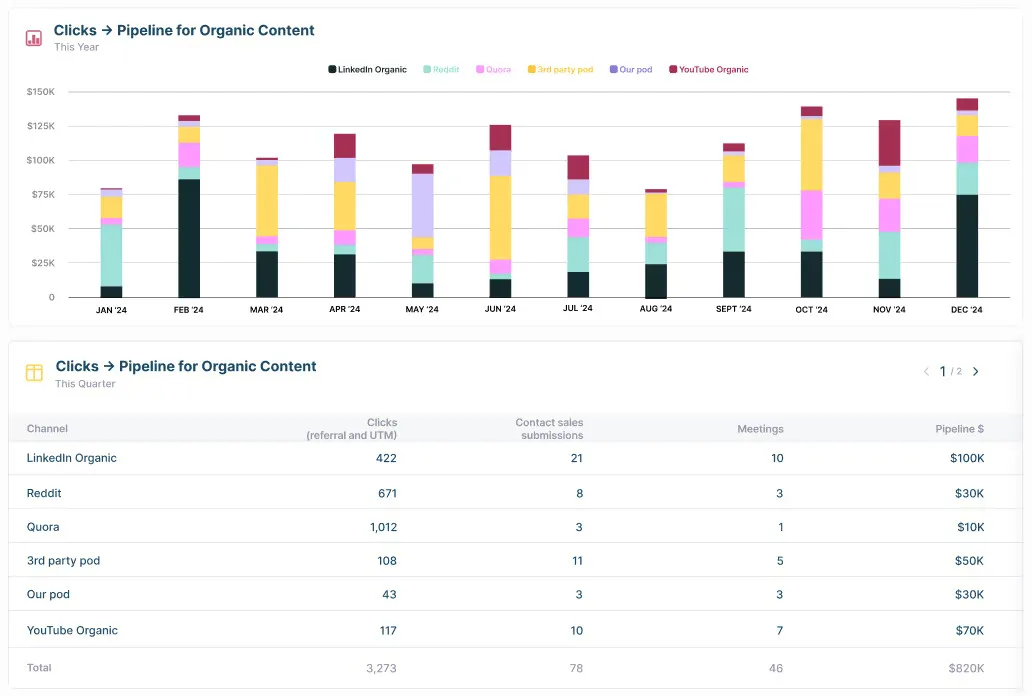
HockeyStack is a B2B attribution platform that helps SaaS teams connect marketing channels with the full customer journey, from first touch through conversion and product adoption. The platform combines website tracking, CRM data, and product usage insights to provide a complete view of channel influence, buyer behavior, and revenue impact.
Where HockeyStack Stands Out
SaaS teams often struggle to understand whether marketing channels are driving real product adoption or simply generating leads that never convert. HockeyStack connects channel interactions with website behavior, CRM outcomes, and product activity to reveal which campaigns and touchpoints create meaningful customer value.
Key Capabilities
- Cross-channel journey tracking. Understand how paid, organic, content, and website interactions influence conversions across complex SaaS buying journeys.
- Marketing-to-product attribution. Connect acquisition channels with in-app activity, user engagement, upgrades, and long-term customer value.
- Impression-level attribution. Measure the impact of ad views and non-click interactions alongside traditional conversion touchpoints.
- Custom revenue dashboards. Build reporting views that connect marketing channels, pipeline performance, and customer behavior.
Pricing
HockeyStack does not publish fixed pricing. Plans are typically custom-quoted and can range from $15,000 to $50,000+ per year depending on tracked accounts, product data requirements, and connected sources.
Recommended Reading: HockeyStack Pricing Review 2026: Costs, Features, ROI
5. Rockerbox
Best for: Omnichannel brands that need to measure revenue impact across digital, offline, and traditional advertising channels.
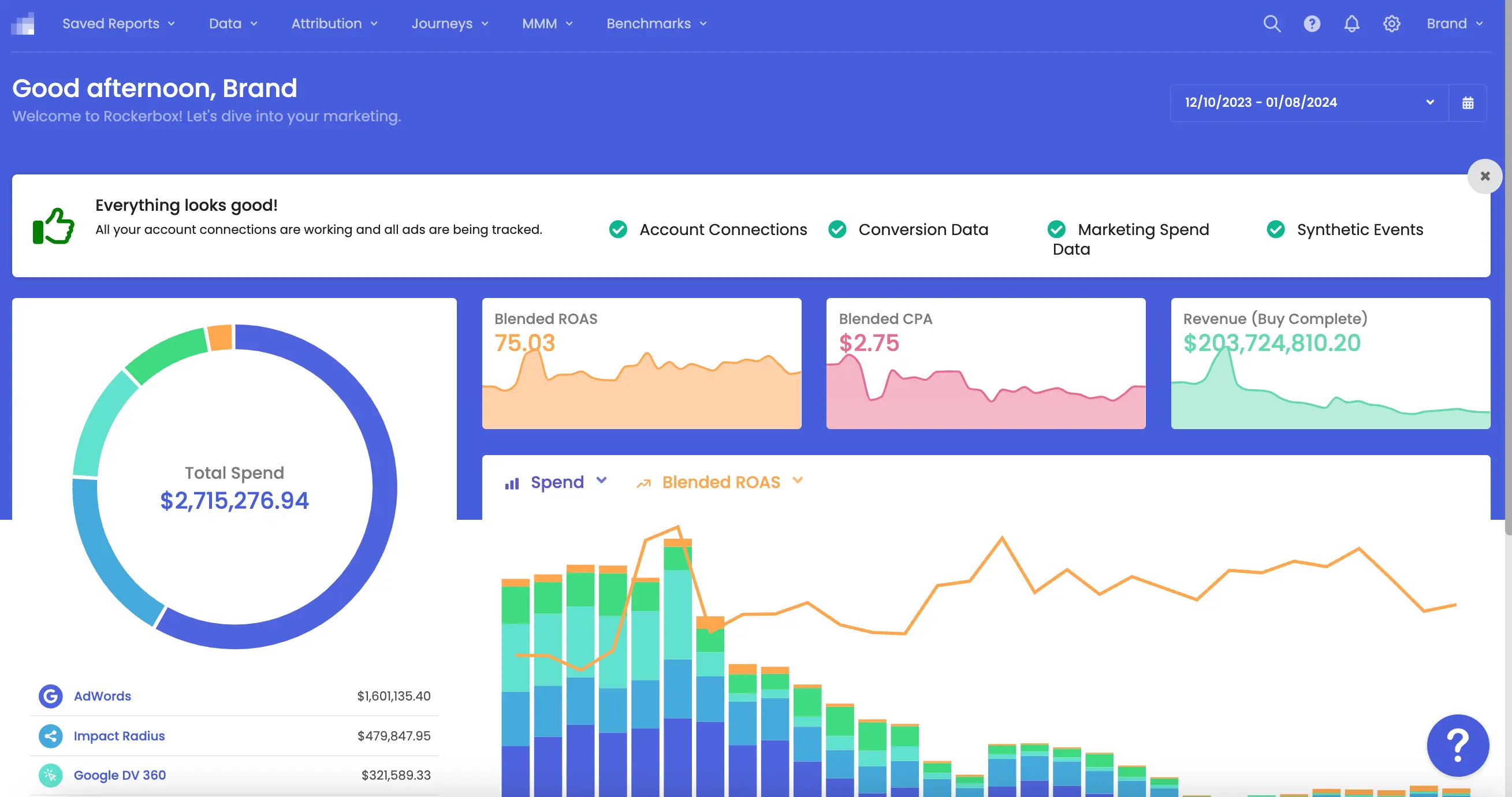
Rockerbox is an omnichannel attribution platform that helps brands understand how marketing channels contribute to customer acquisition and revenue. The platform combines digital tracking, offline media data, and customer behavior signals to provide a complete view of channel performance, campaign impact, and marketing effectiveness.
Where Rockerbox Stands Out
Enterprise brands often struggle to understand the true impact of marketing campaigns that span both online and offline channels. Rockerbox connects digital interactions, offline media exposure, and customer conversions to create a unified view of how different channels influence revenue.
Key Capabilities
- Offline-to-online attribution. Measure how traditional channels such as TV, direct mail, and podcasts influence website activity, customer acquisition, and revenue.
- Media mix measurement. Combine statistical modeling with customer-level attribution to understand channel contribution across the full marketing mix.
- Cross-device identity resolution. Connect customer interactions across devices and touchpoints to understand the complete path from exposure to conversion.
Pricing
Rockerbox does not publish fixed pricing. Enterprise deployments typically start around $30,000/year, with costs depending on media channels, data requirements, and measurement complexity.
6. Adobe Marketo Measure (formerly Bizible)
Best for: Enterprise B2B organizations using Salesforce and Adobe that need structured, multi-touch attribution across complex marketing channels.
Adobe Marketo Measure is an enterprise B2B attribution platform that helps companies connect marketing interactions with pipeline and revenue outcomes. The platform combines CRM data, campaign activity, and digital touchpoints to provide a complete view of channel influence, buyer journeys, and marketing contribution.
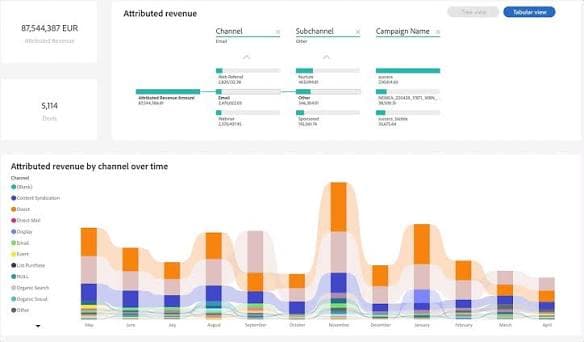
Where Adobe Marketo Measure Stands Out
Enterprise marketing teams often need consistent attribution models that align marketing, sales, and leadership around the same revenue data. Adobe Marketo Measure standardises multi-touch attribution inside the Salesforce ecosystem, helping teams measure how different channels contribute to pipeline creation and closed-won revenue.
Key Capabilities
- Salesforce-native attribution. Connect marketing touchpoints directly with Salesforce opportunities to measure channel influence alongside pipeline and revenue data.
- Multi-touch attribution models. Use structured B2B attribution frameworks such as W-shaped and full-path models to understand the impact of key marketing interactions.
- Marketing ROI measurement. Combine advertising costs, campaign data, and Salesforce revenue information to evaluate channel performance and return on investment.
Pricing
Adobe Marketo Measure does not publish fixed pricing. Enterprise contracts typically start around $25,000/year and scale based on connected systems, data volume, reporting requirements, and Salesforce complexity.
Recommended Reading: Bizible Pricing Review 2026: Costs, Features, ROI
How to Choose the Best Multi-Channel Attribution Software
Now that you’ve explored the best multi-channel attribution software options, here’s how to choose the one that fits your business model, data stack, and reporting needs.
1. Match the Tool to Your Revenue Model
- For B2C & E-commerce: You need real-time Return on Ad Spend (ROAS) tracking that bypasses iOS privacy blocks (like Apple’s App Tracking Transparency). Look for tools built for high transaction volume and fast feedback loops (e.g., Triple Whale).
- For B2B & Enterprise SaaS: You need pipeline attribution that holds up across 3–12 month sales cycles, so that early, anonymous website visits eventually get tied back to a real contact and deal in your CRM(e.g., AttributeIQ, Dreamdata).
2. Check Integration Depth With Your CRM
- For HubSpot-Native Teams: Choose a tool that seamlessly reads from your HubSpot instance, pulling deal and contact data directly into its attribution engine (e.g., AttributeIQ).
- For Salesforce Teams: Look for deep, opportunity-level mapping built specifically to handle complex Salesforce objects and rules (e.g., Bizible).
- For Multi-CRM Environments (Hubspot & Salesforce): You need a standalone platform that syncs them both into one independent database (e.g., Dreamdata, HockeyStack).
- For Data Warehouse Stacks: Choose a custom solution that pulls raw data directly from Snowflake or BigQuery to build your own attribution models (e.g., Rockerbox).
3. Evaluate Based on Your Media Mix (Digital vs. Offline)
- 100% Digital Channels: Standard event-tracking tools work fine to measure click-throughs and conversions across paid search, paid social, and display (e.g., AttributeIQ, HockeyStack).
- Mixed Digital + Offline (TV, Podcasts, Direct Mail): Traditional click tracking fails here. You need software that uses Marketing Mix Modeling (MMM), a statistical method that analyses spending trends against revenue spikes without relying on direct link clicks (e.g., Rockerbox).
4. Audit Your Link Tracking (UTMs) Before You Buy
The Hard Reality: If your team isn’t consistently using standardised UTM parameters on every ad, email, and social post, any platform you buy will output inaccurate reports.
Action Item: Standardise your link-naming conventions across all marketing teams and agencies before signing a software contract.
6 Multi-Channel Attribution Software Buying Mistakes To Avoid
A multi-channel attribution tool can only work with the data it receives. If tracking is incomplete, campaigns are poorly tagged, or CRM data is messy, your reports will not show the true impact of each channel.
How to Implement Multi-Channel Attribution in 90 Days
A successful attribution rollout should produce three things by the end of the first quarter: reliable journey data, an agreed method for assigning credit, and a budget decision that marketing, sales, and finance can defend.
Frequently Asked Questions
Before choosing an attribution platform, think about the decisions you need it to support. Are you trying to understand which channels drive revenue, how buyers move through your funnel, or where your marketing budget is having the biggest impact? AttributeIQ helps B2B teams bring those insights together by connecting website tracking, channel performance, and CRM outcomes in one place. Try it free for 14 days.