The best Ruler Analytics alternatives for marketing attribution in 2026 are AttributeIQ, Dreamdata, HockeyStack, WhatConverts, and Marketo Measure. AttributeIQ is a strong fit for B2B teams measuring content’s influence on pipeline, Dreamdata for complex account-level buying journeys, and WhatConverts as a more direct alternative for teams focused on calls, forms, and lead-source tracking.
Why Marketers Look Beyond Ruler Analytics for Marketing Attribution
Ruler Analytics is a closed-loop attribution platform built around calls, forms, and chat: it ties those conversions back to CRM revenue, which made it a genuine breakthrough for lead-gen teams and agencies when it launched.
That focus is also where teams start to feel the limits. If your conversions are mostly digital, you’re on a GA4 and HubSpot stack, or your pricing needs to stay predictable as traffic grows, Ruler’s traffic-based billing and offline-conversion focus may not be the best fit.
This guide focuses purely on marketing attribution and revenue measurement, tools built specifically to answer which channels, content, and campaigns are driving your pipeline.
5 Marketing Attribution Platforms to Consider Instead of Ruler Analytics
Below, we compare five Ruler Analytics alternatives based on attribution capabilities, pricing, integrations, and overall fit for marketing teams.
1. AttributeIQ
Property
Attribution
Account
jent@nexa.com

Page Influence
Track page-level impact on pipeline volume and closed-won revenue performance.
Total Pipeline
£40.80k
Total Journeys
22
Top High-Value Page
/b2b-sales-lead-scoring
Most Balanced Page
/sales-rep-onboarding
Pipeline by Conversion Event
All pipeline · click an event to filter the journeys below
Pipeline Share
Share of pipeline by conversion event
£40.80k
Pages by Influenced Pipeline
Why AttributeIQ Is a Good Ruler Analytics Alternative
Ruler Analytics works well for businesses where calls, forms, and chats are central to lead generation.
For teams focused on digital content and campaigns, AttributeIQ connects GA4 and HubSpot to give you a clearer view of what happens before a contact becomes a deal, including the marketing activity that influenced the outcome.
The Pro plan, which includes revenue attribution, starts at £149/month with flat pricing, no sales call required, and usable attribution data typically available within 24–48 hours.
Core Features
Journey Explorer gives you a timeline for every converting contact: which pages they visited, in what order, from which channel, with time-on-page for each. You can see that Daniel at Orbitly found your attribution guide via organic search on March 19th, came back through LinkedIn four days later to read a case study, then hit pricing directly before requesting a demo on March 24th.
Board Summary pulls page and channel attribution into one clean, exportable report. Instead of pulling numbers from three different dashboards and stitching them into a deck by hand, you get pipeline-by-content-and-channel numbers ready to export as a PPTX for your next board meeting.
Property
Attribution
Management
Account
jane@nexa.com
Board Summary
Export a board-ready summary of marketing’s influence on pipeline and revenue.
Q2 2026 · Board Summary · 1 Apr 2026 – 30 Jun 2026
Qualified Pipeline
£4.1M
from 47 contacts
Total Revenue
£1.27M
from 14 closed deals
Avg Closed Deal
£90.7k
from 14 closed deals
Top Account
Nexa
£340k influenced
Buyer Intent Tracking adds real-time intent signals on top of your attribution data. You can set alert rules so that the moment a known HubSpot contact visits a high-intent page, like pricing for the third time, or a case study the night before a renewal, you get a Slack notification right away, no dedicated admin required to build or maintain the rule.
Pricing Structure
AttributeIQ offers simple flat monthly pricing across three tiers: Starter, Pro, and Agency, published openly on the site. Every plan includes a 14-day free trial with no credit card required, so you can evaluate attribution capabilities before ever talking to sales. Full pricing breakdown →
See which channels and content influence pipeline and revenue
Follow the buyer journey from first touch to closed deal and see which channels, pages, and content played a role in generating revenue.
2. Dreamdata
Why Dreamdata Is a Good Ruler Analytics Alternative
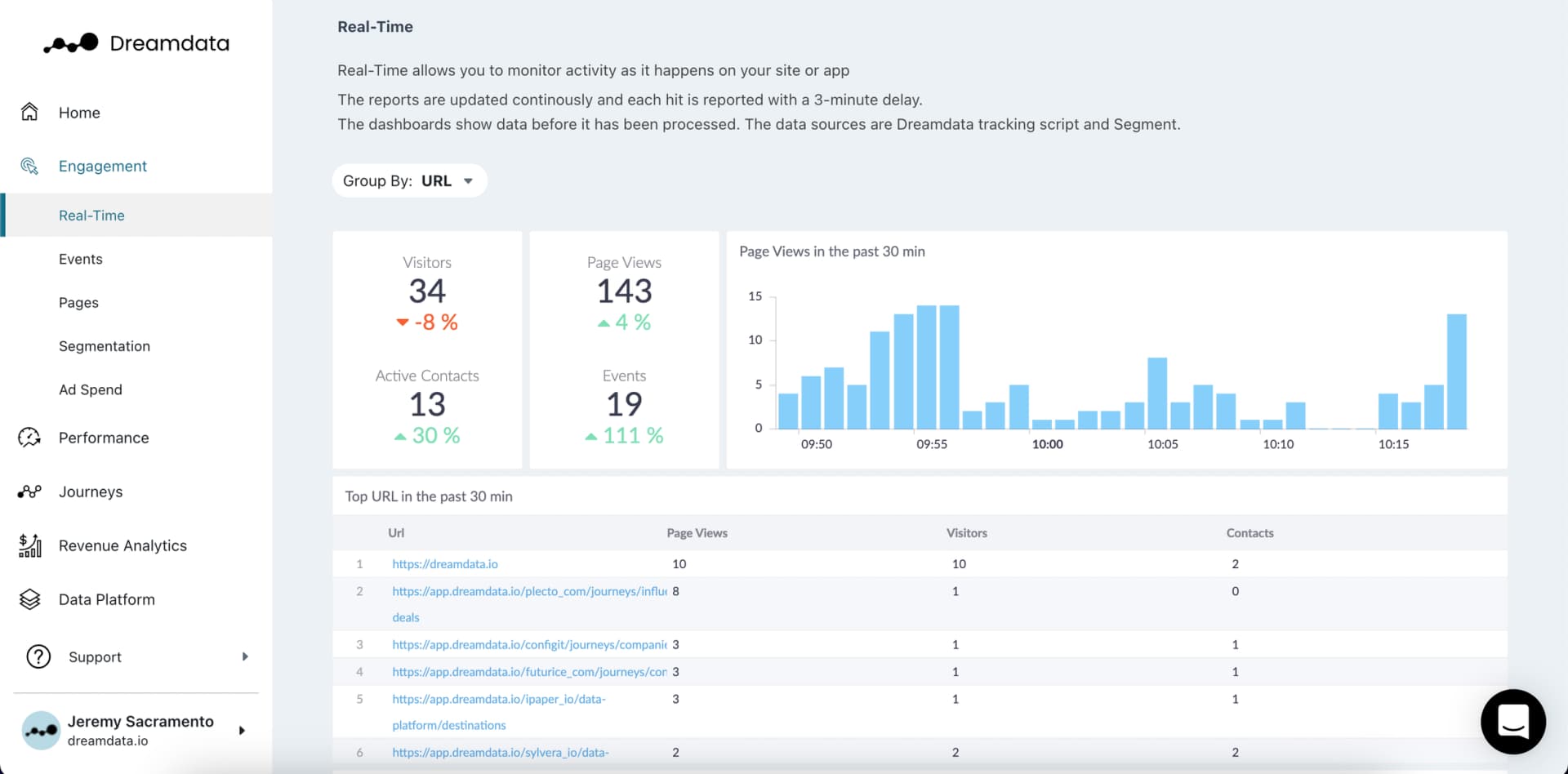
Dreamdata is built around revenue attribution, with a particular focus on mapping account-level journeys and showing how marketing activity contributes to pipeline and closed revenue. That makes it a strong alternative to Ruler Analytics for teams that need attribution to work at the account level rather than the individual call, form, or chat.
Key Strengths
- Account-level journey mapping: Brings web sessions, CRM records, and advertising data together to give teams a complete view of the account journey.
- Flexible multi-touch attribution: Lets teams move beyond first-touch and last-touch models and create attribution rules that reflect their sales cycle.
- Ad spend tied to pipeline: Connects advertising activity and spend across Google, LinkedIn, and Meta with pipeline and revenue outcomes.
- Native CRM integrations: Connects with Salesforce and HubSpot so CRM contacts, accounts, and deal data can feed directly into attribution reporting.
Pricing
Dreamdata has a limited free tier, while paid plans start at around $750/month. More advanced attribution capabilities are available on higher-tier plans with custom pricing, so costs can increase as your reporting and data requirements grow.
3. HockeyStack
Why HockeyStack Is a Good Ruler Analytics Alternative
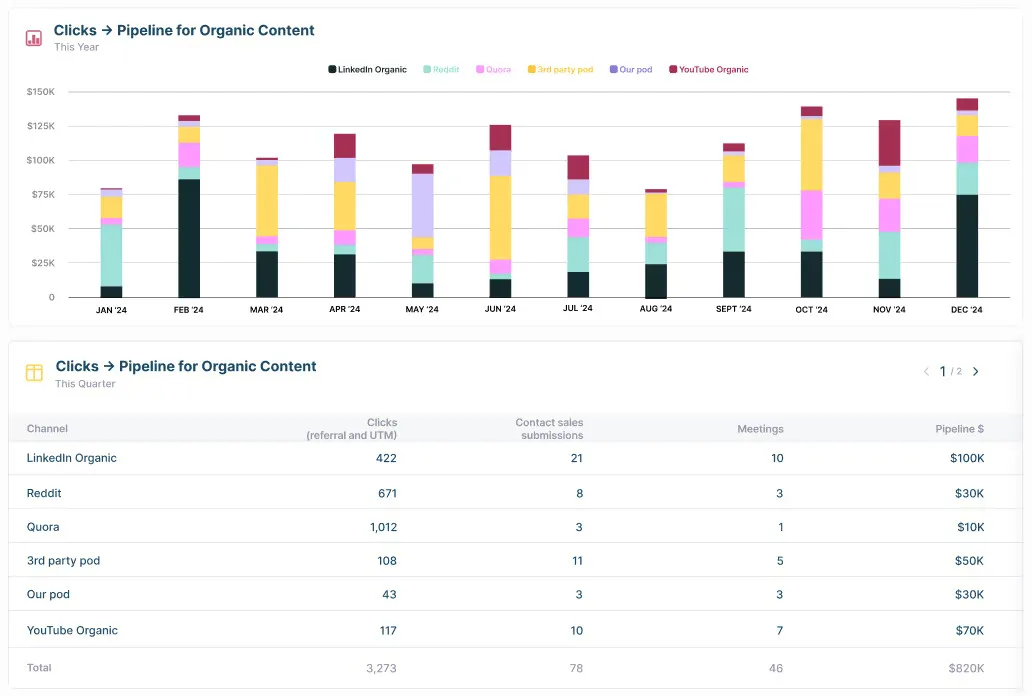
HockeyStack makes sense once your buyer journeys span dozens of touchpoints across paid, organic, and product usage data, more than Ruler’s calls, forms, and chat model was designed to unify. It ingests contact and account activity from across the stack and applies multi-touch attribution models on top, which gives larger marketing teams a fuller picture of what’s actually driving pipeline.
Key Strengths
- Unified buyer journey tracking: Pulls together paid ads, organic channels, CRM data, and product usage into one attribution view rather than treating each source separately.
- Custom attribution modelling: Goes beyond fixed models to let teams build attribution logic that matches longer, more complex B2B sales cycles.
- AI-assisted reporting: Includes an AI analyst that can answer attribution and journey questions directly, cutting down on manual dashboard building.
- Data warehouse connectors: Supports bidirectional syncing with a data warehouse for teams that want attribution data alongside other BI reporting.
Pricing
HockeyStack uses quote-based pricing with no free tier and no published price list. Third-party sources place the entry point at roughly $1,399/month, rising toward $2,200/month and higher depending on tracked contact volume, integrations, and add-ons like account intelligence.
4. WhatConverts
Why WhatConverts Is a Good Ruler Analytics Alternative
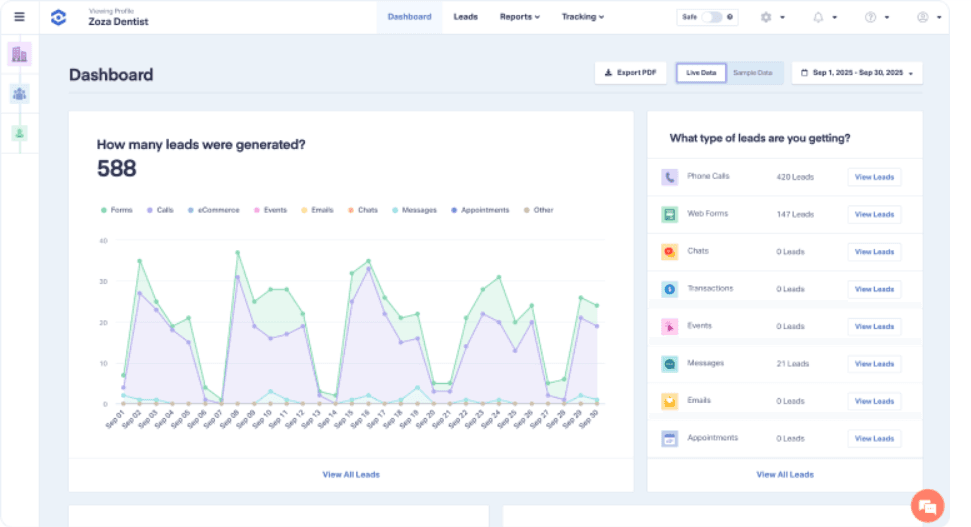
WhatConverts is the closest like-for-like swap for Ruler’s core use case: tying calls, forms, and chats back to the campaign, keyword, and source that generated them. It’s aimed squarely at agencies and lead-gen businesses, with dynamic number insertion, call recording, and lead qualification built in, at a fraction of Ruler’s entry cost.
Key Strengths
- Call, form, and chat tracking: Uses dynamic number insertion, call recording, and keyword-level tracking to attribute every lead source, matching Ruler’s core capability.
- Lead Intelligence: Auto-qualifies, categorises, and values leads so low-quality calls and forms don’t skew attribution reporting.
- Direct Google Ads and GA4 integration: Sends qualified call conversions straight back into ad platforms, so campaign optimisation uses lead quality, not just lead volume.
- Agency-friendly plans: Unlimited-account and white-label tiers make it straightforward for agencies managing attribution across many clients.
Pricing
WhatConverts starts at $30/month for the Call Tracking plan, rising to $60/month (Plus, adds forms and chat), $100/month (Pro, adds API access and compliance features), and $160/month (Elite, adds full multi-channel attribution). Each plan bills lead actions beyond an included credit at $0.10 per lead, so cost tracks with volume rather than a flat traffic tier.
5. Marketo Measure
Why Marketo Measure Is a Good Ruler Analytics Alternative
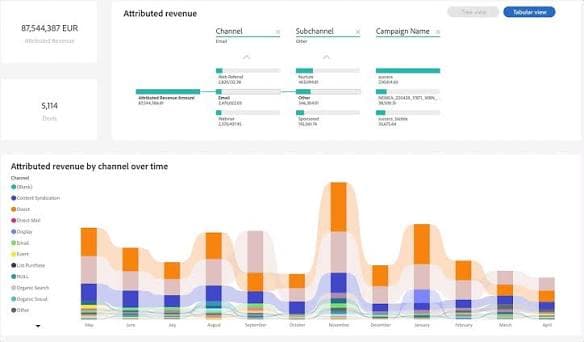
Marketo Measure, formerly Bizible, is built for enterprise B2B teams already running on Salesforce and Adobe Marketo Engage. It tracks every marketing and sales touchpoint, including offline and sales-assisted activity like events and meetings, natively inside Salesforce, a layer of the funnel Ruler doesn’t attribute directly.
Key Strengths
- Every-touch attribution: Uses rule-based and AI-assisted models, including U-shaped, W-shaped, and full-path, rather than crediting only the first or last touch.
- Offline and sales-touch tracking: Captures events, content syndication, direct mail, and sales activity from Salesforce campaign records alongside digital touchpoints.
- Native Salesforce and Marketo integration: Runs inside the systems marketing ops teams already use, rather than requiring a separate reporting layer.
- Persona-based dashboards: Ships with out-of-the-box views for marketing, paid media, sales, and digital marketing stakeholders.
Pricing
Marketo Measure doesn’t publish pricing and offers no self-serve free tier. Typical annual contracts run $20,000–$50,000 for small-to-mid deployments, with larger enterprise deals bundled into Adobe Marketo Engage packages often reaching $30,000–$100,000+ per year.
How to Choose the Right Ruler Analytics Alternative for Your Team in 2026
Choosing a Ruler Analytics alternative comes down to how your marketing generates leads and how deeply you want to measure their path to revenue. Here’s how the five options compare.
Are your conversions mostly digital, or calls and forms?
- Conversions happen mostly on the website: AttributeIQ is the better fit if content and digital touchpoints, not phone calls, are what drive your pipeline.
- Calls, forms, and chat are the main conversion sources: WhatConverts covers the same ground as Ruler, at a lower entry price and with simpler billing.
Do you need contact-level, account-level, or sales-touch attribution?
- Need to follow individual contacts: AttributeIQ shows the pages and channels a specific contact interacted with before converting.
- Need the full account journey: Dreamdata is stronger when several people from the same company are involved and you want attribution at the account level.
- Need offline and sales-assisted touches counted: Marketo Measure pulls in events, direct mail, and sales activity from Salesforce alongside digital touchpoints.
How much scale and complexity does your funnel have?
- Want attribution live quickly, without heavy setup: AttributeIQ and WhatConverts are both designed for fast, mostly self-serve onboarding.
- Have a large, complex GTM data stack: HockeyStack is built for teams with dedicated RevOps resource to manage a more technical implementation.
- Already standardised on Salesforce and Marketo: Marketo Measure runs natively inside that stack rather than adding a separate reporting layer.
What does your attribution budget look like?
- Want to start below $250/month: WhatConverts starts at $30/month, while AttributeIQ starts at £149/month, making both accessible without an enterprise contract.
- Need more advanced revenue attribution: Dreamdata starts around $750/month for paid plans, with more advanced capabilities at higher tiers.
- Have enterprise budget and requirements: HockeyStack and Marketo Measure both run on quote-based pricing, typically starting in the low five figures per month.
Frequently Asked Questions
Ruler Analytics makes sense when calls and forms are a major part of your acquisition process. If they aren’t, AttributeIQ gives you a clearer way to measure the digital activity that actually contributes to pipeline and revenue.
Connect GA4 and HubSpot and try AttributeIQ free for 14 days. Revenue attribution is included in the Pro plan from £149/month, with no traffic-based pricing or sales call required.