We reviewed the leading B2B revenue attribution platforms based on their ability to tie marketing touchpoints directly to closed-won revenue, filtering out tools that stop at leads or pipeline. The top picks for 2026 are:
- AttributeIQ: Best for tracing revenue across channels and pages, from first-touch to closed won.
- Dreamdata: Best for account-based attribution across complex B2B buying groups.
- HockeyStack: Best for cookieless journey mapping and enterprise RevOps reporting.
- Ruler Analytics: Best for closed-loop paid media and offline conversion attribution.
- CaliberMind: Best for enterprise teams needing a CDP with custom multi-touch attribution.
- Marketo Measure: Best for Salesforce teams needing advanced revenue weighting models.
Best Revenue Attribution Software Comparison Table for 2026
There is no shortage of revenue attribution tools promising to connect marketing activity to closed-won revenue. The problem is that they do not all answer the same questions. Some are better at showing content influence, others at mapping complex buying journeys, and others at tying campaigns back to CRM revenue.
Below, we break down the leading platforms for 2026 to help you find the one that best fits your attribution goals, team structure, and reporting needs.
Platform
Best Fit
Attribution Models
Revenue Data Sources
Setup
Starting Price
AttributeIQ
B2B SaaS and demand gen teams that need to prove which content, campaigns, and channels drive pipeline and closed-won revenue
First-touch, last-touch, multi-touch, journey-based
GA4, HubSpot
< 24 hours
£149/mo (~$189/mo)
Dreamdata
Account-based marketing teams with complex, multi-stakeholder buying journeys
First-touch, lead creation, U-shaped, linear, time-decay, custom
Salesforce, HubSpot, ad platforms, marketing automation, web analytics
1–2 weeks
Free tier / $999/mo
HockeyStack
B2B RevOps and GTM teams that want a unified data layer connecting marketing, sales, and customer success activity to revenue outcomes.
First-touch, last-touch, linear, U-shaped, W-shaped, time-decay
CRM, ad platforms, product analytics, marketing tools
1–2 days
Custom (~$1,500/mo)
Ruler Analytics
Performance marketers needing closed-loop revenue matching across paid ads, forms, and calls
First-touch, last-touch, multi-touch
CRM, paid ad networks, forms, call tracking
1–2 weeks
£199/mo (~$250/mo)
CaliberMind
Enterprise marketing teams that need to unify fragmented revenue data across complex GTM systems
Multi-touch, custom weighted models
CRM, marketing automation, ad platforms, data warehouses
4–6 weeks
Custom ($30k+/yr)
Marketo Measure
Salesforce-centric orgs needing visibility into how campaigns influence opportunities and closed revenue.
First-touch, lead creation, multi-touch, W-shaped, custom
Salesforce, Marketo, ad platforms
4–8 weeks
Custom ($20k+/yr)
1. AttributeIQ
Best for: B2B SaaS and demand gen teams using HubSpot and GA4 who need to prove which campaigns, pages, and channels are driving closed-won revenue.
AttributeIQ is a multi-touch revenue attribution platform built specifically for B2B teams that need a defensible view of how digital activity influences closed-won deals. It combines GA4 behavioral engagement with CRM deal records to show which specific pages, campaigns, and content assets touched a buyer before and after conversion.
Property
Attribution
Account
jent@nexa.com

Page Influence
Track page-level impact on pipeline volume and closed-won revenue performance.
Total Pipeline
£40.80k
Total Journeys
22
Top High-Value Page
/b2b-sales-lead-scoring
Most Balanced Page
/sales-rep-onboarding
Pipeline by Conversion Event
All pipeline · click an event to filter the journeys below
Pipeline Share
Share of pipeline by conversion event
£40.80k
Pages by Influenced Pipeline
Pricing starts at £89/month on the Starter plan for multi-touch attribution across website activity. The Pro plan at £149/month enables full CRM-connected closed-won revenue attribution, executive Board Summary PPTX exports, and buyer intent alerts triggered by prospect re-engagement. Both plans include a 14-day free trial with no credit card required. See full pricing.
Core Features
Journey Explorer displays a contact- and account-level view of every touchpoint from first anonymous visit through lead conversion to signed CRM deal. Teams can open any closed-won opportunity and trace the exact articles read, pricing checks, and campaign clicks that occurred over the entire deal duration.
Board Summary gives marketing leaders a clearer way to show what actually influenced revenue. Instead of pulling numbers from CRM, analytics, and campaign reports separately, teams can see which channels and content played a role in closed-won deals.
Property
Attribution
Management
Account
jane@nexa.com
Board Summary
Export a board-ready summary of marketing’s influence on pipeline and revenue.
Q2 2026 · Board Summary · 1 Apr 2026 – 30 Jun 2026
Qualified Pipeline
£4.1M
from 47 contacts
Total Revenue
£1.27M
from 14 closed deals
Avg Closed Deal
£90.7k
from 14 closed deals
Top Account
Nexa
£340k influenced
Buyer Intent Alerts give revenue operations real-time Slack visibility when decision-makers from active deals, stalled opportunities, or closed-won accounts revisit pricing, security, or other high-intent pages. Useful for prioritising timely sales follow-up while buyer interest is still active.
Pros
- Live revenue attribution in under 24 hours. Enterprise revenue attribution platforms often require weeks of data engineering, custom tracking, and analytics resources before showing which channels influence closed revenue. AttributeIQ connects directly with GA4 and HubSpot, allowing teams to start analysing pipeline and revenue impact almost immediately.
- Flexible revenue attribution views. AttributeIQ lets you understand revenue performance through first-touch, last-touch, and multi-touch models, showing how individual channels, campaigns, and content contribute to pipeline and closed-won revenue.
- Accessible pricing for revenue-focused teams. Starting at £149/month, AttributeIQ provides CRM-connected revenue attribution and deal-level reporting without the five-figure annual contracts common among enterprise platforms.
- No dashboard dependency for revenue questions. Pro users can ask attribution questions conversationally through Claude-powered analytics instead of manually building reports to understand which channels influenced closed revenue.
Cons
- No historical revenue attribution before installation. Because the software connects engagement data to HubSpot deals moving forward, it cannot reconstruct buyer journeys that happened before tracking was installed. Teams with longer sales cycles may need time to build enough attribution data to confidently measure revenue impact.
- Limited CRM ecosystem support. AttributeIQ works best for teams using supported platforms like HubSpot and GA4. Organisations running other CRM systems may need to evaluate whether the available integrations support their revenue attribution needs.
Prove which marketing efforts drive closed-won revenue
AttributeIQ gives your team clear visibility into the channels and content that influence closed-won ARR, from first-touch touch to signed deal. Starts at £149/mo. Live in under 24 hours.
Try it free for 14 days →2. Dreamdata
Best for: Account-based marketing teams with complex, multi-stakeholder buying journeys.
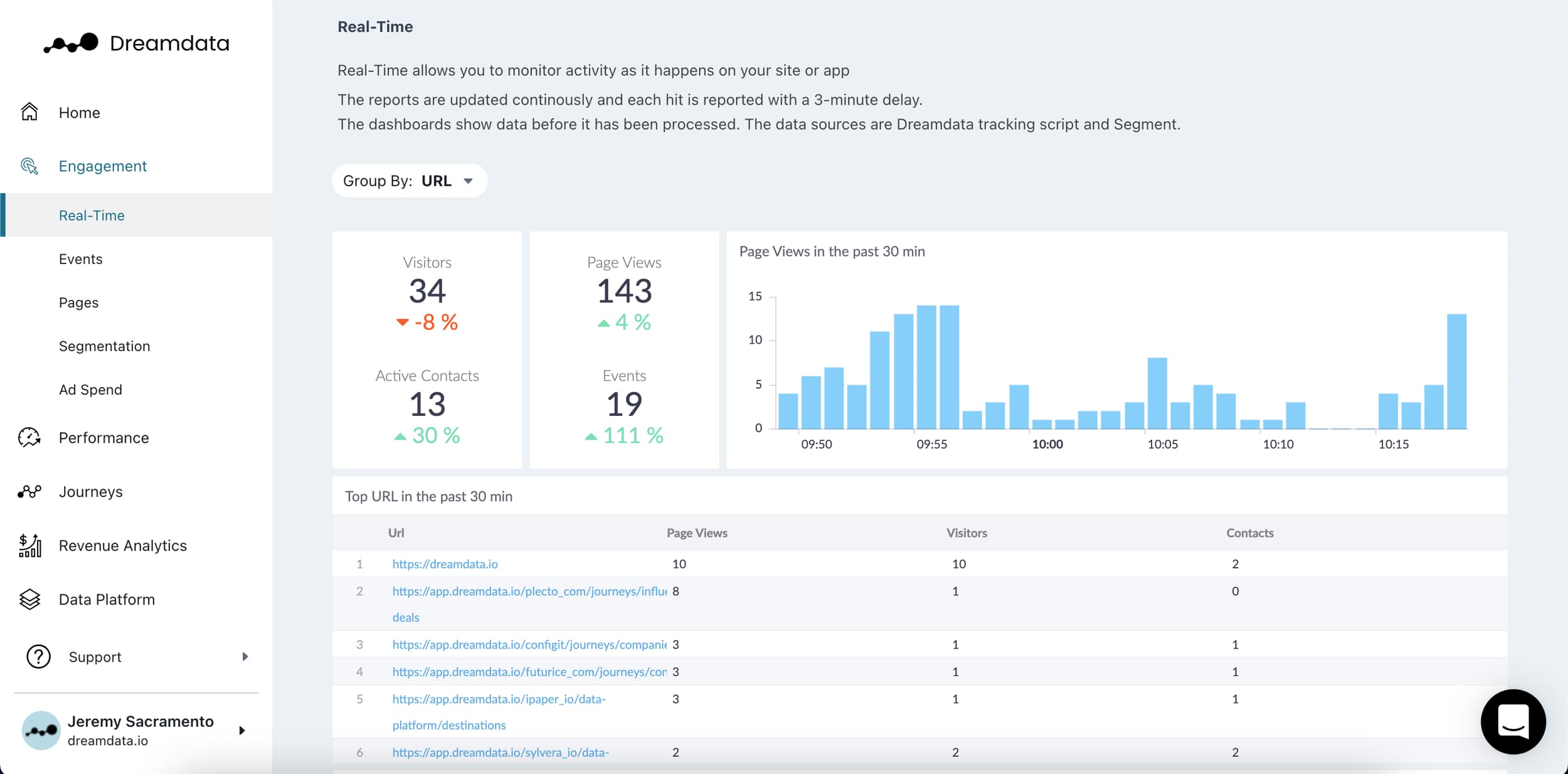
Dreamdata is an account-based revenue attribution platform built for B2B organisations running long, committee-driven sales cycles. It consolidates behavioral data, intent signals, offline touchpoints, and CRM data into a unified account-level model, connecting every stakeholder interaction to closed-won revenue.
Pricing
Offers a limited Free tier for basic attribution. Paid plans start at $999/month and include advanced revenue attribution, data transformations, and deeper reporting capabilities.
Core Features
- Account-level revenue attribution. Maps activity across multiple contacts within the same account, helping teams understand how campaigns and interactions contribute to closed-won deals.
- Flexible attribution models. Supports first-touch, lead creation, U-shaped, linear, time-decay, and custom models to analyse revenue contribution across long sales cycles.
- Revenue data unification across the GTM stack. Connects Salesforce, HubSpot, ad platforms, and web analytics to create a single view of marketing influence on revenue.
- Closed-loop ad performance measurement. Links advertising spend to CRM revenue outcomes, helping teams evaluate acquisition costs based on actual deals rather than leads or conversions.
Cons
- Requires stronger data foundations. Account matching, CRM fields, and attribution logic need to be configured correctly, often requiring RevOps involvement during implementation.
- Higher investment for smaller teams. Starting costs and implementation requirements make it better suited for established B2B teams with mature revenue operations.
3. HockeyStack
Best for: B2B RevOps and GTM teams that want a unified data layer connecting marketing, sales, and customer success activity to revenue outcomes.
HockeyStack is a B2B revenue attribution platform built around connecting fragmented GTM data. Using cookieless tracking, it combines website activity, product usage, sales interactions, and CRM outcomes to reveal which activities contribute to closed-won revenue.
Pricing
Custom pricing, typically starting around $1,500/month, depending on account volume, traffic, and required integrations.
Core Features
- Unified customer journey tracking. Combines website visits, sales activity, product usage, and CRM interactions into a single timeline connected to revenue outcomes.
- Flexible revenue attribution models. Supports first-touch, last-touch, linear, U-shaped, W-shaped, and time-decay models to analyse marketing contribution across the buying journey.
- Revenue reporting across the GTM stack. Connects CRM, ad platforms, product analytics, and marketing tools to give teams a unified view of revenue performance.
Cons
- Requires sufficient data volume. More advanced attribution insights require consistent traffic, account activity, and deal flow to produce reliable patterns.
- Higher cost for smaller teams. Custom pricing and implementation requirements may put it beyond the budget of early-stage or smaller B2B organisations.
4. Ruler Analytics
Best for: Performance marketers needing closed-loop revenue matching across paid ads, landing page forms, and inbound calls.
Ruler Analytics provides a closed-loop attribution layer connecting first-party tracking data with CRM deal records. It links marketing campaigns to final sales outcomes by sending closed-won revenue data back into analytics platforms and ad channels once deals are closed.
Pricing
Plans start at £199/month based on site traffic, domains, and trackable conversion volume.
Core Features
- Closed-loop CRM matching. Captures visitor data, matches it to the corresponding CRM record, and updates marketing reports with revenue figures once a deal closes.
- Offline and call revenue tracking. Connects phone conversions back to the originating digital campaign and applies closed-won values to call-driven leads.
- Ad network revenue feedback. Sends closed-won deal data back to Google Ads and Meta, allowing campaigns to be optimised around revenue rather than lead volume.
Cons
- Less focus on content influence. Better suited to paid acquisition channels, with less visibility into organic content and page-level influence on the buyer journey.
- Requires tracking discipline. Consistent UTM structures and CRM hygiene are required to maintain accurate revenue attribution over time.
5. CaliberMind
Best for: Enterprise marketing teams that need to unify fragmented revenue data across complex GTM systems.
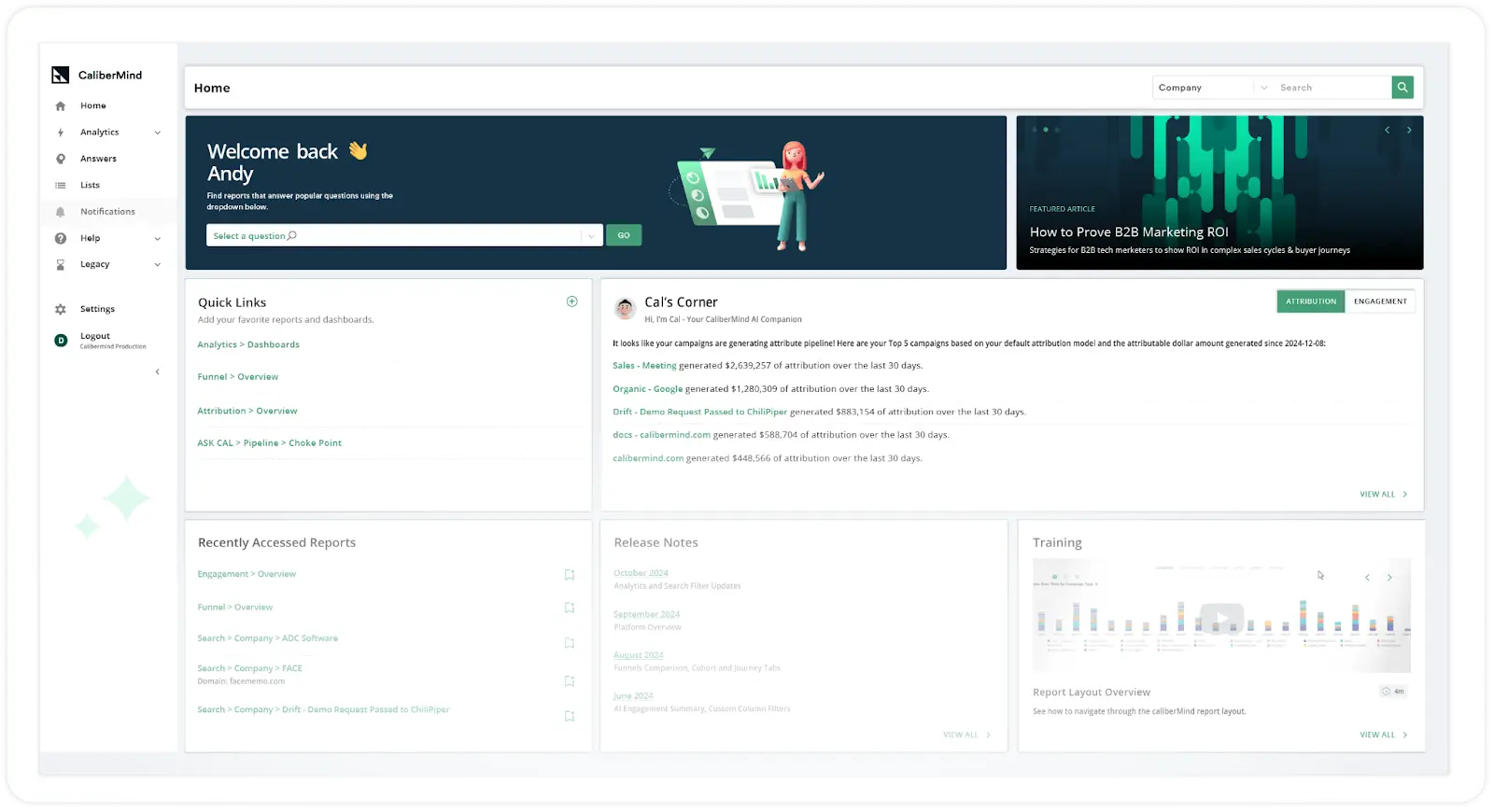
CaliberMind is a revenue attribution platform and Customer Data Platform (CDP) designed for enterprise B2B organisations managing complex GTM environments. It consolidates data across CRM, marketing automation, sales engagement, and data warehouse systems to create a unified revenue model for advanced attribution analysis.
Pricing
Custom enterprise pricing, typically starting around $30,000+ per year, depending on data requirements, integrations, and implementation support.
Core Features
- Revenue data unification. Combines data from CRM, marketing automation, ad platforms, and data warehouses into a centralised revenue intelligence layer.
- Custom attribution modelling. Supports multi-touch and weighted models to analyse complex B2B journeys and measure revenue contribution across channels.
- Enterprise revenue reporting. Provides advanced reporting across acquisition costs, customer value, and marketing contribution to support strategic revenue decisions.
Cons
- Complex implementation process. Deployment can take 4–6 weeks and often requires RevOps resources to manage data preparation, integrations, and attribution setup.
- Designed for enterprise environments. The platform may be more complex than required for teams with simpler GTM structures or reporting needs.
6. Marketo Measure (Bizible)
Best for: Salesforce-centric organisations needing visibility into how campaigns influence opportunities and closed revenue.
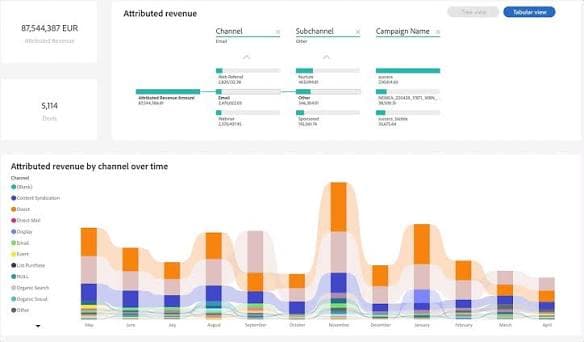
Marketo Measure (formerly Bizible) is an enterprise revenue attribution platform built around the Salesforce ecosystem. It connects marketing interactions across digital channels and offline activities to Salesforce opportunities, helping teams understand which campaigns influence pipeline progression and closed revenue.
Pricing
Enterprise pricing typically starts around $20,000+ per year, depending on CRM complexity, data requirements, and reporting needs.
Core Features
- Multi-touch attribution models. Supports first-touch, lead creation, multi-touch, W-shaped, and custom models to allocate marketing influence across Salesforce opportunities.
- Campaign influence tracking. Connects marketing campaigns across paid channels, digital activity, and offline interactions to opportunity and revenue outcomes.
- Salesforce revenue mapping. Uses Salesforce opportunity data to link marketing activity with deal stages, pipeline movement, and closed revenue.
Cons
- Longer implementation cycle. Setup typically requires Salesforce configuration, data alignment, and internal resources before attribution reporting becomes reliable.
- Salesforce dependency. Works best for organisations with mature Salesforce processes and structured opportunity data.
How to Choose the Best Revenue Attribution Software for Your Team
Now that we’ve looked at the main revenue attribution platforms available, the next question is which one actually fits your team. The best choice comes down to how your buyers purchase, where your data lives, and how much complexity your team can realistically manage.
1. How complex are your buyer journeys?
- Multi-channel B2B journeys: If your buyers move across content, campaigns, and multiple site visits before converting, platforms like AttributeIQ connect all of that to CRM outcomes without a heavy implementation lift.
- Enterprise account-based journeys: Platforms like Dreamdata are designed for organisations where multiple stakeholders, account activity, and complex buying committees need to be combined into one revenue view.
2. How is your marketing data structured?
- If you rely heavily on HubSpot and GA4 and need fast, page-level revenue visibility, AttributeIQ offers a rapid deployment path with no data engineering required.
- If your organisation maintains complex custom objects inside Salesforce or Snowflake data warehouses, enterprise engines like CaliberMind or Marketo Measure are built for that scale.
3. Do you need channel-level ad optimisation or content influence?
- If the priority is feeding closed-won deal values back to ad networks to optimise ad spend, tools like Ruler Analytics or Dreamdata excel at ad-platform data syncs.
- If the goal is identifying which blog posts, case studies, product pages touched high-value deals, and tying that influence directly to closed-won revenue, choose a platform focused on deep content influence like AttributeIQ.
4. What are your implementation capabilities?
- Small or agile teams: Choose platforms with sub-24-hour setup requirements (e.g., AttributeIQ) that operate out of the box via a single tracking script, with no RevOps dependency to get started.
- Dedicated RevOps teams: Platforms requiring 4–8 weeks of custom data mapping and CRM customisation (e.g., CaliberMind, Marketo Measure) become viable if RevOps can manage ongoing maintenance.
Common Mistakes When Evaluating Revenue Attribution Platforms
On paper, most revenue attribution platforms look similar. They promise better visibility, smarter reporting, and a clearer link between marketing and revenue. The differences only show up once you’re using them. Here are the areas teams most often get caught out evaluating vendors.
First 90 Days: Proving ROI with Your Revenue Attribution Software
Your first 90 days with a revenue attribution platform should focus on making sure the data is accurate enough to guide decisions. Validate your tracking, identify which channels and content influence revenue, then use those insights to reallocate your marketing budget with confidence.
Frequently Asked Questions
There’s no single “best” revenue attribution platform, only the one that matches how your buyers move and how much setup your team can realistically support. Once you’ve narrowed it down, the fastest way to know is to connect your CRM and see which pages and campaigns are actually showing up in closed-won deals. AttributeIQ is free to try for 14 days if you want to start there.