We compared the top digital marketing attribution platforms for 2026 based on how well they connect digital channels, website activity, campaigns, and conversions to revenue.
- AttributeIQ: Best for tracking the full digital journey from first visit to closed deal.
- Dreamdata: Best for mapping complex B2B buyer journeys across multiple touchpoints.
- Ruler Analytics: Best for connecting digital campaigns and enquiries to sales revenue.
- HockeyStack: Best for visualising how website activity moves buyers through the funnel.
- SegmentStream: Best for building custom attribution models from ad and analytics data.
- Adobe Marketo Measure: Best for measuring campaign influence across enterprise stacks.
Best Digital Marketing Attribution Software Comparison for 2026
Digital marketing in 2026 has no shortage of activity.
There are campaigns running across Google and LinkedIn, content being published, PR mentions going live, and buyers moving through dozens of different touchpoints. But getting a clear line of sight from a digital click to a closed-won deal still takes more guesswork than it should.
Below we’ve compared the top attribution platforms that help B2B teams connect digital channels and customer behavior to measurable business outcomes.
Software
Best For
Digital Channels Tracked
Attribution Models
Setup
Starting Price
AttributeIQ
Tracking the full digital journey from first website visit through conversion, opportunity creation, and closed deal.
SEO, content, paid search, paid social, email campaigns
Multi-touch attribution, first-touch, last-touch, journey-based attribution
<24 hours
£89/mo (~$113/mo)
Dreamdata
Mapping complex B2B buyer journeys across multiple digital touchpoints and showing how each interaction contributes to revenue.
Paid search, paid social, SEO, content, email
Multi-touch, first-touch, last-touch, linear, U-shaped, W-shaped
2–3 weeks
Free plan / $999/mo
Ruler Analytics
Connecting digital campaigns, website enquiries, and inbound conversions back to the sales revenue they generate.
Paid search, Paid social, SEO
First-touch, last-touch, multi-touch attribution
1–2 weeks
£199/mo (~$250/mo)
HockeyStack
Visualising how website visits, content interactions, and marketing touchpoints move buyers through the funnel.
Paid search, paid social, SEO, content, email
Multi-touch attribution, journey-based attribution
1–2 days
Custom (~$1,400/mo)
SegmentStream
Building custom digital attribution models from large volumes of advertising, analytics, and conversion data.
Paid media, organic
Data-driven attribution, multi-touch attribution
3–6 weeks
Custom
Adobe Marketo Measure
Measuring digital campaign influence across complex enterprise marketing stacks and long customer journeys.
Paid search, paid social, SEO, email
Multi-touch attribution, custom weighted models
4–8 weeks
Custom enterprise pricing
1. AttributeIQ
Best for: B2B marketing teams that need to see which specific pages, campaigns, and digital channels influenced pipeline and closed-won revenue.
AttributeIQ connects website behaviour, campaign activity, and CRM revenue data to show the exact digital touchpoints behind deals. Instead of relying on clicks or last-touch reporting, it reveals how content, landing pages, ads, and organic traffic contribute throughout the buyer journey.
Property
Attribution
Account
jent@nexa.com

Channel Influence
Measure channel impact across pipeline creation and closed-won revenue.
Total Pipeline
£440k
Avg Pipeline Value
£25.9k
Most Active Channel
Direct
Fastest Converting
Referral / urlopener.net
All Pipeline by Channel
£440k total pipeline
Velocity by Channel
Channel Breakdown
Pricing starts at £89/month on the Starter plan for essential multi-touch attribution across website pages. The Pro plan at £149/month unlocks closed-won CRM revenue integration, automated executive Board Summary PPTX exports, and real-time buyer intent alerts triggered by prospect re-engagement. Both plans include a 14-day free trial with no credit card required. See full pricing.
Core Features
Journey Explorer provides a contact-level view of every digital touchpoint that contributed to a deal, from the first website visit through conversion and closed revenue. Instead of guessing which channel gets the credit, you can open any deal and see the exact sequence: where the contact first landed, which channels brought them back, and what they engaged with right before converting.
Board Summary brings your entire attribution picture into a single, high-level executive report, showing which digital channels, campaigns, and buyer journeys are influencing pipeline. Instead of piecing together reports from multiple systems, teams can walk into board meetings with a clear picture of marketing’s impact on revenue.
Property
Attribution
Management
Account
jane@nexa.com
Board Summary
Export a board-ready summary of marketing’s influence on pipeline and revenue.
Q2 2026 · Board Summary · 1 Apr 2026 – 30 Jun 2026
Qualified Pipeline
£4.1M
from 47 contacts
Total Revenue
£1.27M
from 14 closed deals
Avg Closed Deal
£90.7k
from 14 closed deals
Top Account
Nexa
£340k influenced
Deal Tracking & Alerts lets you monitor the digital behaviour behind every active opportunity in real time. Set alerts around high-intent actions, like repeated pricing visits, demo page views, or periods of inactivity, and know when a prospect’s behaviour changes before it shows up in your CRM.
Pros
- Live digital attribution in under 24 hours. Most attribution platforms need weeks of data engineering and custom tracking work before you see anything useful. AttributeIQ connects directly to GA4 and HubSpot, so teams can start tracing which pages, campaigns, and channels are influencing pipeline almost immediately.
- Flexible attribution views. First-touch, last-touch, or multi-touch: you can switch between models to see how a channel’s role changes depending on where it sits in the journey, rather than being locked into one way of assigning credit.
- Accessible pricing for lean marketing teams. Starting at £89/month, AttributeIQ gives digital and demand gen teams page-level and channel-level pipeline visibility without the five- or six-figure contracts that come with enterprise attribution platforms.
- No dashboard-building for quick questions. Pro users can ask attribution questions conversationally through Claude-powered analytics instead of constructing a custom report every time someone asks “what drove that deal.”
Cons
- No retroactive journeys. Attribution starts from the moment tracking goes live; it can’t reconstruct what happened before the script was installed. For teams with longer B2B sales cycles, you’ll need a few months of live tracking before the numbers start to feel reliable enough to act on.
- Built around HubSpot and GA4. That’s where the integration is deepest. Teams running a different CRM or analytics stack should confirm connector support before assuming it’ll slot in cleanly.
- Starter plan is single-property. It covers one GA4 property, which won’t fit teams managing multiple regional sites or separate brand properties. That needs the Pro tier.
Prove digital marketing impact with numbers finance can’t challenge
See how your digital channels, ad campaigns, and web pages drive real pipeline with AttributeIQ. Connect GA4 and HubSpot in under 24 hours, with revenue reporting from £149/mo.
Try it free for 14 days →2. Dreamdata
Best for: B2B companies that need account-level attribution across complex buying journeys involving multiple digital channels, stakeholders, and long sales cycles.
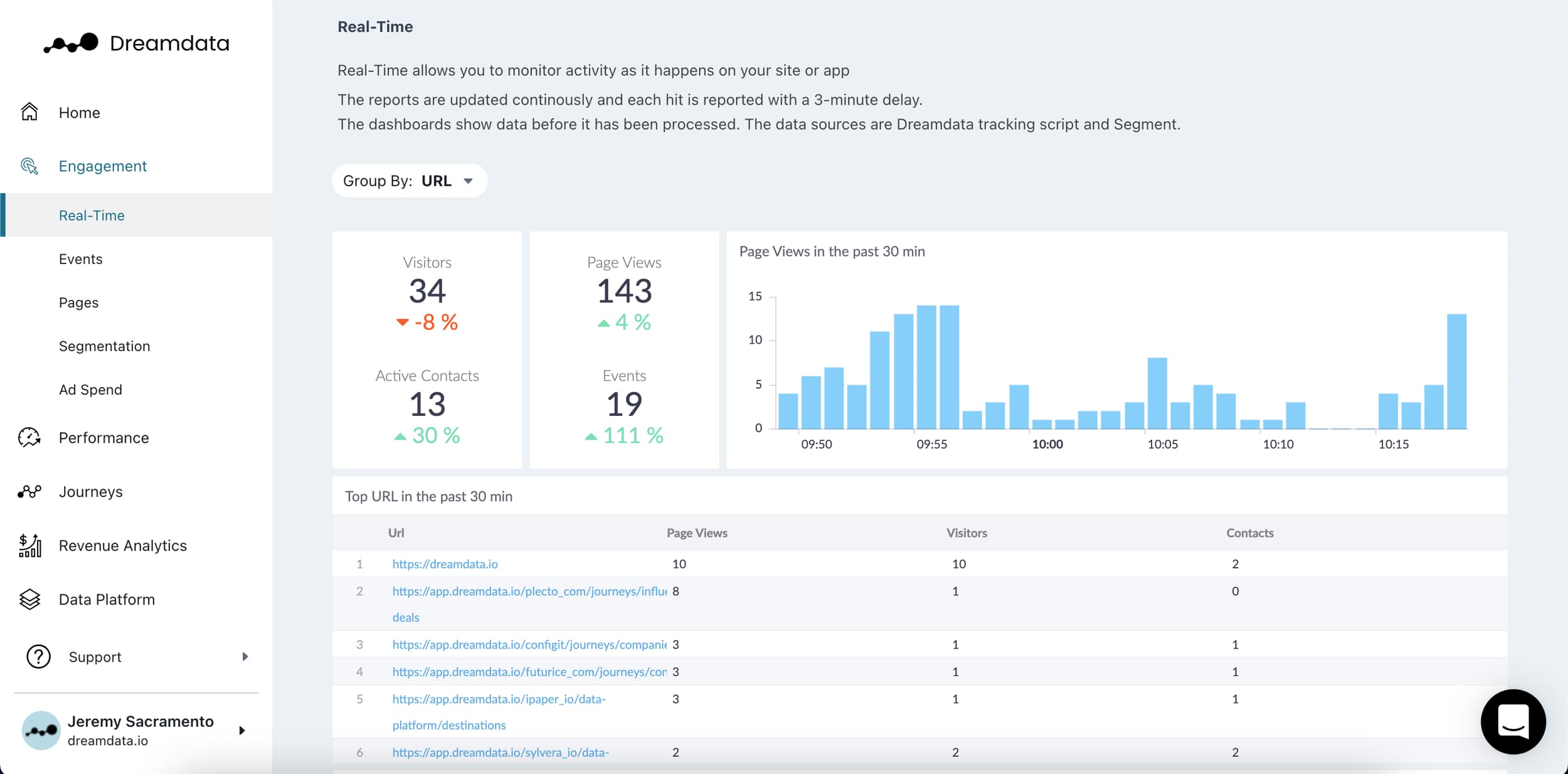
Dreamdata is an attribution platform designed to connect marketing touchpoints across the entire buyer journey. It brings together paid media, organic search, content, email, website activity, and CRM data to show how digital interactions contribute to pipeline creation and closed revenue.
Pricing
Dreamdata offers a free plan for basic attribution tracking, with paid plans starting around $999/month. Pricing scales based on data volume, attribution requirements, and additional reporting needs.
Core Features
- Account-level attribution. Aggregates activity across all stakeholders within an account, ensuring multi-threaded deals are attributed accurately rather than fragmented across individual contacts.
- Full-journey revenue reporting. Tracks paid, organic, and content touchpoints against their actual position in the buying journey, rather than defaulting to first- or last-touch credit.
- Multiple attribution models. Supports first-touch, last-touch, linear, U-shaped, and W-shaped models, enabling teams to evaluate channel influence from different analytical perspectives.
- Enterprise-grade integrations. Connects CRM, advertising platforms, and analytics tools into a single, unified attribution layer across the marketing stack.
Cons
- Implementation is resource-intensive. Realising the platform’s full reporting depth requires connecting multiple data sources and ensuring CRM data integrity from the outset.
- Exceeds the needs of simpler funnels. Organisations with shorter, single-touch buying journeys will likely find the platform’s account-level complexity unnecessary.
- Data confidence builds over time. Organisations with longer sales cycles require a sustained period of live tracking before sufficient account-level journeys accumulate to support high-confidence conclusions.
3. Ruler Analytics
Best for: Connecting digital campaigns, website enquiries, and inbound conversions back to the sales revenue they generate.
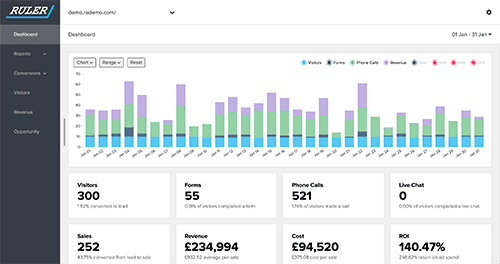
Ruler Analytics is a closed-loop digital attribution platform that connects marketing touchpoints with sales outcomes. It tracks how prospects arrive through paid search, paid social, SEO, and website interactions, then links those journeys back to leads, opportunities, and revenue inside the CRM.
Pricing
Pricing starts at £199/month (~$250/mo), with plans scaling based on visitor volume, tracking requirements, and the number of conversions being attributed.
Core Features
- Closed-loop digital attribution. Connects website visits, campaigns, and lead conversions with CRM revenue data to show which digital channels generate sales.
- Lead source tracking across digital channels. Captures the journey behind form submissions, calls, and enquiries to identify the marketing activity that created demand.
- Multi-touch attribution reporting. Compare first-touch, last-touch, and multi-touch attribution models to understand how different channels contribute throughout the buying journey.
Cons
- Less focused on complex account journeys. Ruler is strongest for connecting digital acquisition channels to leads and revenue rather than analysing multi-stakeholder B2B buying journeys.
- Requires clean CRM data. Revenue attribution depends on accurate lead, opportunity, and customer data flowing through connected systems.
- Primarily focused on attribution reporting. Teams looking for broader buyer journey analytics or account intelligence may need a more advanced platform.
4. HockeyStack
Best for: Companies looking to visualise how website activity, content engagement, and marketing touchpoints move buyers through the funnel.
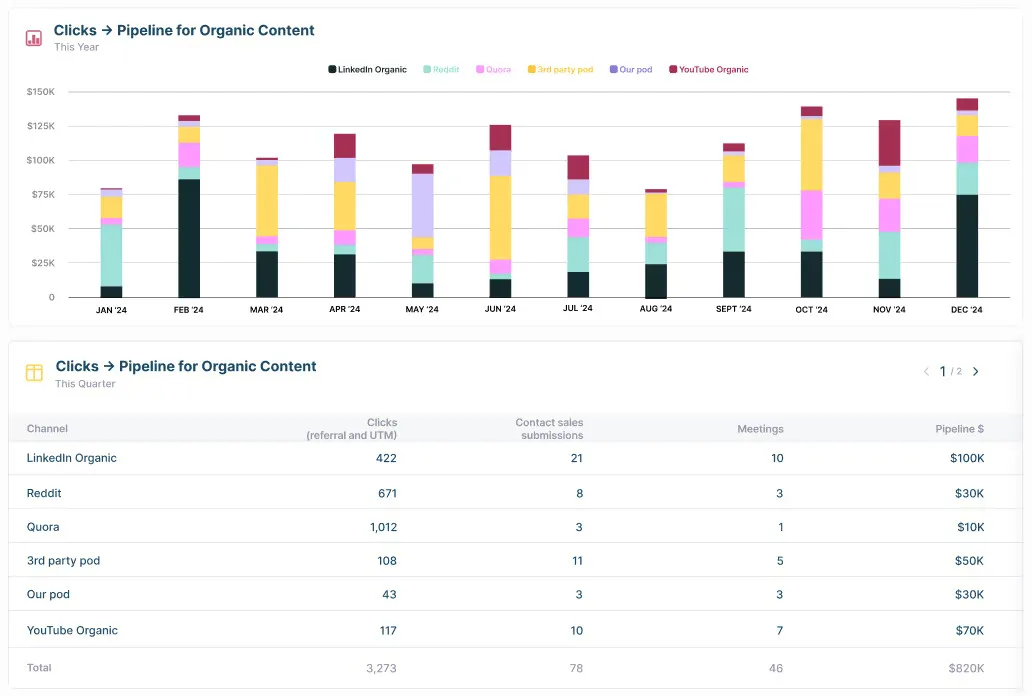
HockeyStack is a digital attribution and buyer journey analytics platform that helps teams understand how prospects interact with marketing before becoming customers. It captures website behaviour, campaign interactions, and conversion events, then connects those digital journeys to pipeline stages and revenue outcomes.
4. HockeyStack
Best for: Companies looking to visualise how website activity, content engagement, and marketing touchpoints move buyers through the funnel.
HockeyStack is a digital attribution and buyer journey analytics platform that helps teams understand how prospects interact with marketing before becoming customers. It captures website behaviour, campaign interactions, and conversion events, then connects those digital journeys to pipeline stages and revenue outcomes.
Pricing
HockeyStack uses custom pricing, with plans typically starting around $1,400/month depending on website traffic, data requirements, and connected sources.
Core Features
- Visual buyer journey tracking. Maps the sequence of website visits, campaign interactions, and conversion events that move prospects toward becoming customers.
- Digital funnel analysis. Helps teams identify where buyers engage, where they convert, and which digital touchpoints influence progression through the funnel.
- Multi-touch attribution reporting. Connects paid search, paid social, SEO, content, and email activity to understand their contribution across the buyer journey.
- CRM revenue alignment. Links marketing interactions with pipeline stages so teams can analyse which digital journeys lead to revenue.
Cons
- Designed for data-rich teams. Organisations with lower website traffic or simpler funnels may not benefit from the depth of behavioural analysis.
- Enterprise pricing model. Custom pricing can make it less accessible for teams looking for lightweight attribution reporting.
- Requires clear funnel definitions. Teams get the most value when lifecycle stages, conversions, and revenue tracking are already well structured.
5. SegmentStream
Best for: Data-driven marketing teams that need custom digital attribution models built across large volumes of advertising, analytics, and conversion data.
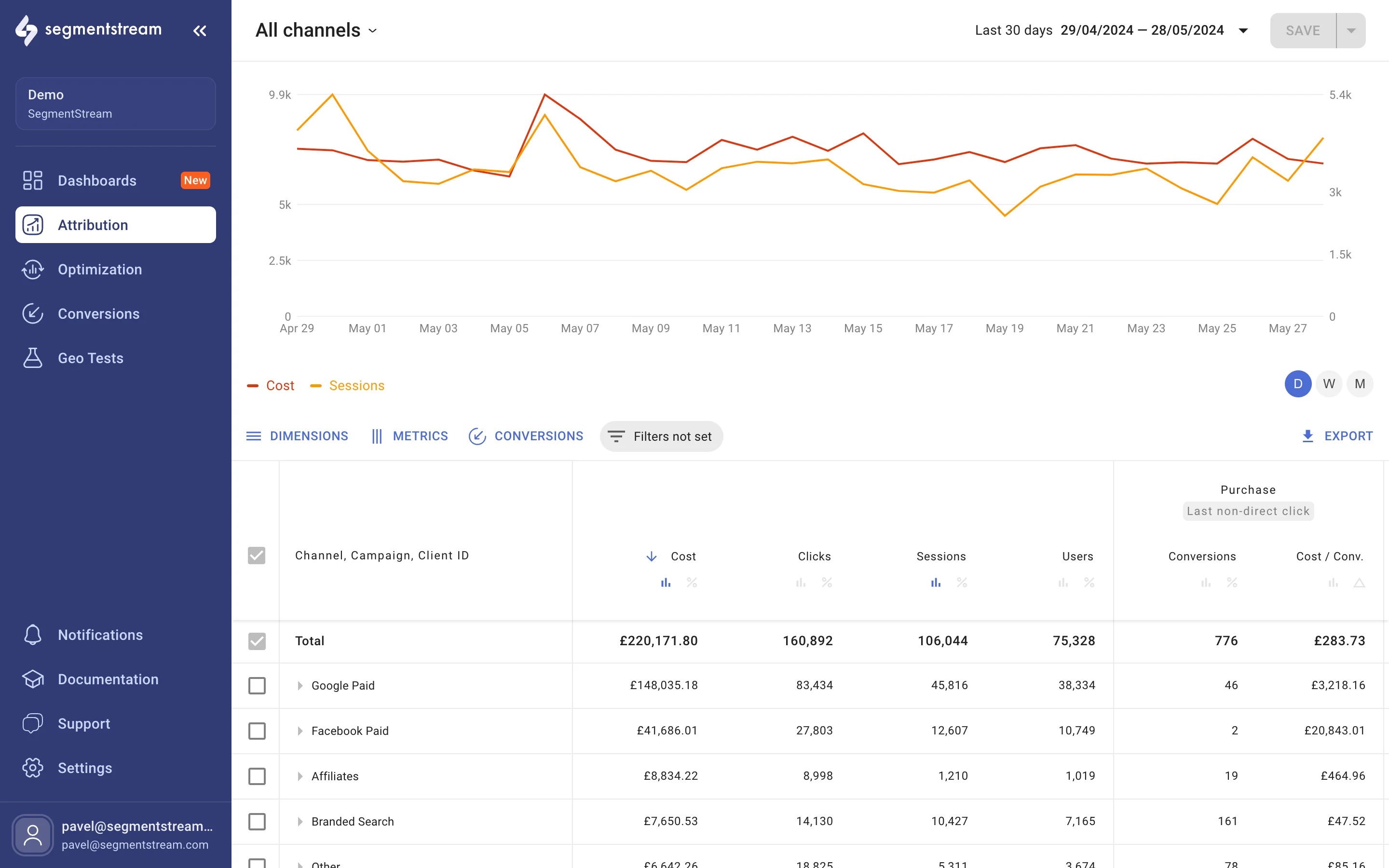
SegmentStream is a data-driven attribution platform designed for organisations that need more control over how marketing performance is measured. It collects digital marketing data from multiple sources, applies custom attribution models, and helps teams analyse how different channels contribute to conversions and revenue.
Pricing
SegmentStream uses custom pricing based on data volume, tracking requirements, and the complexity of attribution models being implemented.
Core Features
- Custom digital attribution modelling. Allows teams to build attribution frameworks based on their own conversion paths, marketing channels, and business requirements.
- Centralised marketing data collection. Brings together paid media, analytics platforms, website events, and conversion data into a unified attribution layer.
- Advanced multi-touch analysis. Helps teams understand channel contribution beyond basic last-click reporting by analysing multiple digital interactions before conversion.
Cons
- Requires technical resources. The flexibility of custom attribution models often requires more involvement from analytics, data, or engineering teams during implementation.
- Longer implementation timeline. More advanced data integrations and custom modelling typically require several weeks before the full attribution framework is operational.
- Less suited for teams wanting quick insights. Organisations looking for fast, out-of-the-box attribution reporting may find simpler platforms easier to deploy.
6. Adobe Marketo Measure (Bizible)
Best for: Enterprise marketing teams that need to measure digital campaign influence across complex marketing stacks and long customer journeys.
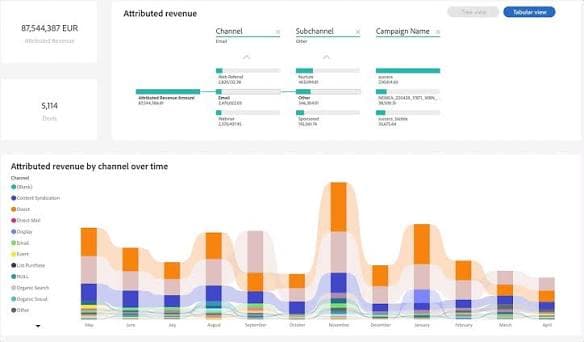
Adobe Marketo Measure (formerly Bizible) is an enterprise multi-touch attribution platform built for B2B organisations with complex buying cycles. It connects digital marketing interactions across paid search, paid social, SEO, email, and web campaigns with CRM opportunities to show how marketing touchpoints contribute to pipeline and revenue.
Pricing
Adobe Marketo Measure uses custom enterprise pricing based on marketing complexity, data requirements, and the number of connected systems.
Core Features
- Enterprise multi-touch attribution. Assigns revenue influence across multiple marketing interactions instead of relying only on first-touch or last-touch reporting.
- CRM-connected revenue attribution. Links digital campaign engagement with opportunities and pipeline data to show marketing’s contribution to revenue.
- Custom attribution models. Supports configurable attribution frameworks for organisations with complex buying journeys and different revenue reporting requirements.
- Enterprise marketing stack integration. Works alongside CRM, marketing automation, advertising platforms, and analytics systems to create a unified attribution view.
Cons
- Enterprise implementation process. Connecting CRM, marketing platforms, and campaign data typically requires dedicated technical and operational resources.
- Built for complex organisations. Smaller teams with simpler funnels may find the platform more advanced than required for their attribution needs.
- Requires mature marketing data. The accuracy of attribution depends on consistent campaign tracking, CRM hygiene, and reliable lifecycle data.
How to Choose the Best Digital Marketing Attribution Software for Your Team
Now that we’ve broken down the top digital attribution platforms on the market, here’s how to choose the right one for your team.
1. What is your primary go-to-market model?
- E-commerce and D2C brands spending heavily on paid social, paid search, and influencer campaigns will benefit most from first-party pixel tools like Triple Whale, which unify Shopify, Meta, Google, and email/SMS data into a single blended attribution view.
- B2B SaaS and service teams should choose CRM-integrated platforms like AttributeIQ, which connect GA4, website behaviour, and HubSpot/Salesforce revenue to show which pages, campaigns, and channels influence pipeline and closed-won deals.
2. Do you convert prospects via digital calls as well as online forms?
- If inbound phone calls from digital ad campaigns drive a large portion of revenue, choose Ruler Analytics for its dynamic call tracking, which attributes each call to the original source, campaign, and keyword.
- If conversions occur mainly via online demo forms, trial signups, and chat, AttributeIQ provides rapid, page-level pipeline attribution tuned to exactly that kind of conversion path.
3. How complex is your B2B buying journey?
- If revenue comes from long, multi-touch buying journeys, platforms like Dreamdata, HockeyStack, and AttributeIQ provide visibility into how digital interactions contribute throughout the path to conversion.
- If the goal is evaluating overall channel efficiency, Rockerbox focuses on measuring media performance across channels through multi-touch attribution, media mix modelling, and incrementality analysis.
4. What are your technical implementation resources?
- Lean teams without a dedicated analytics engineer should opt for platforms offering rapid, native setup (under 24 hours to 2 days) like AttributeIQ.
- Teams with dedicated RevOps resourcing can absorb the 4–6 week (sometimes 60–90 day) custom data mapping and warehouse integrations that Rockerbox or Dreamdata require.
Common Buying Mistakes When Evaluating Digital Marketing Attribution Platforms
Choosing the wrong digital attribution platform can leave teams with more dashboards but little clarity on what’s driving revenue. The right platform should connect digital activity to pipeline and closed-won deals, giving teams a clearer view of what is contributing to business growth.
How to Get Value From Your Digital Attribution Software in the First 90 Days
The first 90 days should establish the foundation for reliable digital attribution. Connect your key data sources, confirm that website and campaign tracking is working, and begin analysing which channels, campaigns, and digital touchpoints are influencing pipeline and closed-won revenue.
Frequently Asked Questions
The best way to evaluate a digital attribution platform is to see it against your own customer journeys. Connect your data, review the touchpoints behind your opportunities, and understand which channels influence revenue. From there, you can decide whether attribution deserves a permanent place in your marketing stack or whether your current reporting approach is enough. Try AttributeIQ free for 14 days.